Search This Blog

Wednesday, May 30, 2012

MANAGING MIGRAINE - MIGRAINE TRIGGER FOODS
Trigger identification and management is an essential part of Migraine disease management. Migraine triggers are physical things that bring on a Migraine attack when a Migraineur is exposed to them. There are a wide range of Migraine triggers - some avoidable, others not. Once triggers are identified, it's sometimes possible to reduce the frequency of Migraine attacks by avoiding those triggers.
One type of trigger that can be identified and avoided as food triggers. Not everyone has food triggers, but it's well worth checking into. Some Migraineurs will identify food triggers fairly easily by noticing that every time they eat something, they have a Migraine. Other Migraineurs employ an elimination diet to investigate food triggers. To do an elimination diet, you eliminate all the potential trigger foods from your diet, then add them back in one at a time, with a week between adding each food. It's important to note that a Migraine can occur up to 48 hours after eating a trigger food. Keeping an accurate Migraine diary is essential to identifying trigger foods.
POTENTIAL TRIGGER FOODS:
1. Vegetables: beans, pickles, chili peppers, olives
2. Fruits: dried fruits, avocados, red plums, bananas, citrus fruits
3. Breads: any fresh yeast product straight from the oven, yeast breads, pizza, soft pretzels
4. Meats and Seafood: any preserved or processed meat, bacon, hot dogs, sausage
5. Dairy Products: aged cheeses, sour cream, whole milk
6. Beverages: alcoholic beverages, especially red wine, chocolate beverages, caffeinated beverages
7. Miscellaneous: anything with MSG, artificial sweeteners, vinegar
It can be frustrating to manage food triggers. It can seem especially difficult to eat in a restaurant ro go to parties. When managing food triggers means fewer Migraines, it's well worth it. Most Migraineurs with food triggers find that only a few foods are a problem. If you're going to a party with food, offer to make a dish or two that you know you can safely eat.

Monday, May 28, 2012

MEMORIAL DAY 2012
Memorial Day is a United States federal holiday observed annually on the last Monday of May(May 28 in 2012). Formerly known as Decoration Day, it originated after the American Civil War to commemorate the fallen Union soldiers of the Civil War. By the 20th century, Memorial Day had been extended to honor all Americans who have died in all wars. Memorial Day is a day of remembering the men and women who died while serving in the United States Armed Forces.

Friday, May 25, 2012

THE SILENT KILLER: HIGH BLOOD PRESSURE
Having high blood pressure is like a ticking time bomb waiting to go off. This serious medical condition can lead to serious health problems and even death from a heart attack or stroke. The difficulty is that people have no idea they have high blood pressure until it is too late. There are no warning signs to tell a person they have high blood pressure, they in fact, feel fine. No one is immune to high blood pressure. Experts are not sure of what causes it, but they do know that certain factors raise one's risk including:
  • Being overweight - high blood pressure risk is greatest for people who are obese.
  • Smoking - if you smoke, quit.
  • Not exercising - to cut your risk of high blood pressure, make physical activity a habit.
  • Drinking too much alcohol - limit the amount to no mor than two drinks a day for men and one drink a day for women.
  • Consuming too much salt - you can reduce your risk by limiting sodium intake.
  • Stress - try to eliminate stressors from your life.

The only way to know if you have high blood pressure is to get checked by your doctor. Your doctor will diagnose you with high blood pressure after you have had at least two high blood pressure readings. High blood pressure is treated through lifestyle changes and/or medication.

Doctors recommend that all adults should be screened for high blood pressure every year. Being screened for this medical condition is easy and painless, so don't gamble with your health, have your blood pressure checked annually.

source: www.ahealthiermichigan.org

Wednesday, May 23, 2012

LIVING WITH LACTOSE INTOLERANCE? HERE ARE TRICKS TO ENJOY DAIRY.
Lactose intolerance is a digestive disorder where one is unable to properly break down lactose. Lactose is the natural sugar found in dairy products. If you suffer from painful gas, bloating, cramps, nausea or diarrhea within two hours of eating dairy products, you might be lactose intolerant. Its symptoms can be uncomfortable, but they are usually manageable with diet and lifestyle modifications.
The first thing most people worry about with lactose intolerance is not getting enough calcium or other vitamins. There are many calcium-rich non-dairy foods. Think dark leafy greens, soy, sesame seeds, flax seeds, broccoli, oranges and even papaya and add them to your diet; they are all calcium-rich foods. Don't forget to include Vitamin D, which helps your body absorb and use calcium efficiently. You can also take a calcium supplement to help make sure you get the recommended amount of calcium needed daily.
When you are lactose intolerant, you must listen to your body. Every situation is different and each person suffers to a different degree of lactose intolerance. Just because you are lactose intolerant does not mean that you have to cut out all dairy. In general, cooking or heating dairy foods can help break down the dairy sugar and make it easier for you to digest. Some people are able to take a lactase enzyme supplement right before they eat these foods and consume them without any symptoms. Here are some other options:
1. MILK - Some people enjoy Lactaid milk, which is a lactose-free milk product. There are other alternatives, such as soy, rice, almond, hemp and coconut milk.
2. YOGURT - Despite lactose intolerance, many people can handle yogurt fairly well. Also, yogurts with active and live bacterial cultures seem to agree with lactose intolerant people more readily. Keep that in mind when you are choosing yogurt.
3. ICE CREAM - Some people are fine with ice cream and others are not. This is a reminder for people to test themselves with certain foods, because it is very much a case-by-case situation. You may be able to tolerate milk, but not ice cream, or cheese but not yogurt.
4. CHEESE - Who doesn't love cheese? Cheese has different amounts of lactose, depending on what kind you are eating. Pay attention to your body. Usually aged cheeses, cottage cheese, ricotta cheese, and natural cheeses contain less lactose. On the othe hand, cheese spreads, cheese in a can and some processed cheeses are known to have more lactose.
Are you lactose intolerant? Or do you think that you might be? Listen to your body and figure it out. You will feel better in the long run.

Monday, May 21, 2012

VARICOSE VEINS AND SPIDER VEINS
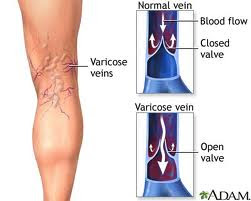
Varicose veins are large, raised, swollen blood vessels that twist and turn. They usually develop in the legs and can be seen through the skin. Spider veins are smaller, red, purple, and blue vessels that also twist and turn. Spider veins are easily visible through the skin as well. They are most often seen on the legs and face.
A number of factors predispose a person t varicose veins and spider veins. These include:
Heredity
Occupations that involve a lot of standing, such as nurses, hair stylists, teachers & factory workers
Hormonal influencs during pregnancy, puberty and menopause
The use of birth control pills
Postmenopausal hormonal replacement
A history of blood clots
Conditions that cause increased pressure in the abdomen including tumors, constipation, and externally worn garments like girdles.
Other reported causes include trauma or injury to the skin, previous vein surgery, and exposure to ultraviolet ray.
Varicose veins and spider veins develop more often in women than in men. They increase in frequency with age. An estimated 30% to 60% of adults have varicose veins or spider veins.
Many patientw with varicose veins complain of pain, described as an aching or cramping in the legs. Other common symptoms include tiredness, restlessness, burning, throbbing, tingling, or heaviness in the legs. Pain caused by varicose veins is usually relieved by elevating the legs or by wearing support hose. In women, symptoms may be worse during certain parts of the menstrual cycle or during pregnancy. Patients also may develop swelling, ulcers, and an increase in the pigmentation or darkening of the color of their skin, especially in the ankle region. Occasionally, varicose veins can form a painful blood clot with inflammation of the vein called thrombophlebitis.
There are seven major forms of treatment for varicose veins and spider veins.
1. Support Stockings. The most conservative approach is simply to wear properly-fitting support hose, especially when the veins cause painful or uncomfortable symptoms. These stockings can generally be purchased at any surgical supply store and at some pharmacies.
2. Lifestyle Changes. Good skin hygiene, weight loss (if needed), and walking can help treat varicose veins and spider veins.
3. Sclerotherapy. This procedure, which has been available since the 1930s, is another treatment option. This procedure uses a highly concentrated saline solution or a specially made detergent that is injected directly into the vein, causing the vein to disappear gradually over three to six weeks. The procedure is simple, relatively inexpensive, and can be performed in an outpatient setting.
4. Endovenous Laser Treatment. A procedure in which a small laser fiber is inserted into the vein. Pulses of laser light are delivered inside the vein, which causes the vein to collapse. The procedure is done as an outpatient under local anesthesia.
5.Radiofrequency Occlusion. A small catheter is inserted into the vein. The catheter delivers radiofrequency energy to the vein wall, causing it to heat, collapse, and seal shut. The procedure is generally done in an outpatient or in-office setting and may be done under local anesthesia.
6. Surgery. Surgical techniques to treat varicose veins include ligation (tying off the vein) and stripping (removal of a long segment of vein). Another procedure, ambulatory phlebectomy, allows for the removal of large surface veins through very small incisions that do not need stitches. Surgery may be performed using local, spinal, or general anesthesia. Most patients return home the same day as the procedure. Surgery is generally used to treat large varicose veins.
7. Lasers and Intense Pulsed Light. Surface laser or intense pulsed light treatments, such as Vasculight and PhotoDerm, are other options. These devices use heat energy to selectively damage or destroy abnormal veins. An advantage of these treatments is that no needles or sclerosing solutions are required however there may be some minor discomfort. Side effects do occur, including discoloration or staining and blister formation.
Not all patients need treatment for their varicose veins or spider veins. Many people have no pain or symptoms. For these individuals, not treatment is necessary, unless they want the veins removed for cosmetic reasons. Many insurance companies do cover the cost of treating varicose veins, but generally not spider veins. The best approach is to check with your insurance company before considering treatment options.


WHAT IS GOUT?
When you are in the middle of a painful gout attack, you may feel like you are the only one dealing with gout. But you are not alone. According to the National Arthritis Data Workgroup, an estimated 6 million people in the U.S. report having experienced gout at some point in their lives. In fact, gout is the most common form of inflammatory arthritis in men over the age of 40.
So, what exactly is gout? We know that it's a form of arthritis that is caused by high uric acid levels in your blood(hyperuricemia). Gout attacks occur when excess uric acid forms crystals, causing inflammation in your joints that leads to swelling and pain. As your uric acid level rises, so does the potential for gout and gout flares. Over time, gout attacks can become more severe, last longer, and occur more often.
Decreasing your uric acid to the recommened level(less than 6 mg/dL) can reduce the risk of gout attacks over the long term.

GOUT SIGNS AND SYMPTOMS:
Gout flares usually strike suddenly, at night, and without any warning. During the attack, the affected area becomes hot, red, swollen, and extremely tender. Having gout may sometimes feel like your toe is a volcano erupting into a hot, fiery flare. Gout may be best known for causing severe pain in the toe. In fact, most gout attacks occur in the big toe. However, you may be surprised to learn that gout attacks can occur in other parts of the body as well.
Who gets gout? There are certain characteristics that affect your likelihood of experiencing gout:
- Men, especially between the ages of 40 and 50, are more likely to develop gout than women.

- Most women experience gout after menopause.

- There may be a genetic link: many people with gout have a family history of the disease.

- Gout rarely affects children or young adults.

- People with certain conditions are at a higher risk for gout. These conditions include diabetes, high cholesterol, high blood pressure, and/or kidney problems.

Gout symptoms may look a bit different in people over 60 years of age. For one thing, the joints in the upper part of their body are more likely to be affected than the joints in the lower body. And, people over 60 often experience painful gout attacks in mor than one joint at the same time.


Friday, May 18, 2012

AN APPLE A DAY...
The person who stated that "an apple a day keeps the doctor away" was not trying to throw doctors out of business. Fact remains that an apple is filled with goodness, and regular consumption of this delicious fruit can help people stay away from various health conditions. Some of the most important health benefits of an apple are:
1. GOOD FOR THE BONES: Women who have reached the stage of menopause could use apples to stay healthy and increase bone density. Researchers have found that apples contain a particular flavanoid called phloridzin that can help women decrease the risk of suffering from osteoporosis by strenthening bones. Apples are also a rich source of boron, one of the most important factors for strengthening bones.
2. ASTHMA: The relation between asthma and apples start from the time the fetus is in the uterus. Studies show that women who have apples when they are pregnant will deliver children who are at a lower risk of suffering from asthma. Children who drank apple juice on a daily basis are less likely to suffer from asthma than children who did not.
3. ALZHEIMER'S PREVENTION: A preclinical study on mice has shown that quercetin in apples could be able to protect brain cells from the free radicals that are known to lead to Alzheimer's disease.
4. DECREASES CHOLESTEROL: Apple contains pectin, a substance that is known to lower the level of bad cholesterol or LDL. It has been observed that just having two apples a day can decrease the level of cholesterol by as much as 16%.
5. LUNG CANCER: In a study involving 10,000 people, it was observed that those who had an apple on a daily basis were twice more safe from lung cancer than people who did not have apples. This has been attributed to the fact that apples contain flavonoids, quercetin and naringin.
6. DECREASES RISK OF BREAST CANCER: Just by having an apple a day, women were 17% less likely to suffer from breast cancer.